
Red Strawberries and Blue Misery: An Anatomy of Laila Marrakchi's Strawberries
- May 21
- 3 min read
Cannes 2026 Review: "La Mas Dulce (Strawberries)"
Shahran Morshed
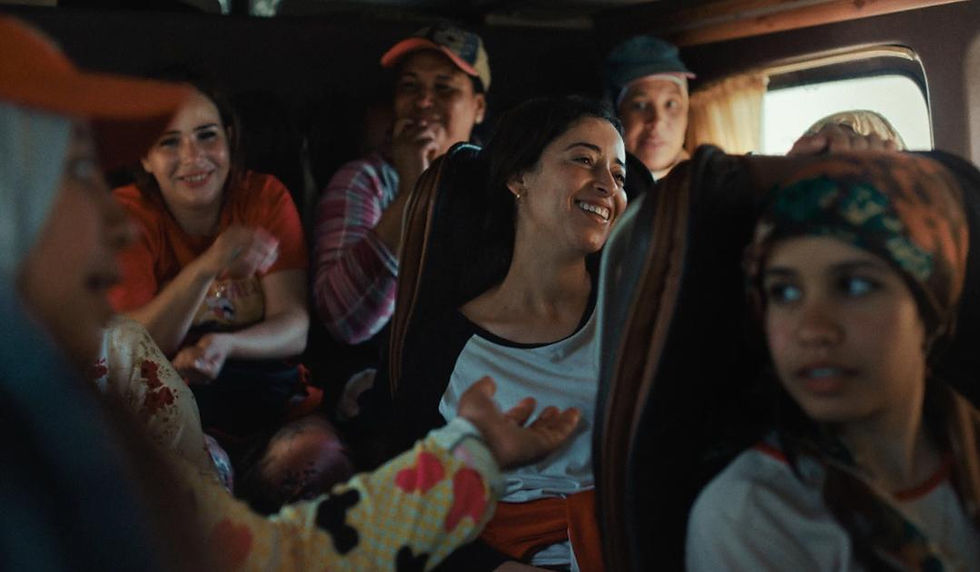
Laila Marrakchi has always loved exposing the cracks within the social structure of Morocco. However, her new work, La Mas Dulce (Strawberries), is not merely a social portrait; it has become a brutal chronicle of global capitalism. This joint production between Morocco, France, and Belgium tells the dark story of the sweat, blood, and gender-based exploitation behind the bright, plump strawberries on our dining tables.
The core plot revolves around the real lives of thousands of marginalized migrant women who travel every year from Morocco to the Huelva region of Spain. The European media and local corporate circles often refer to them as "Strawberry Brides." Marrakchi mindfully demonstrates how these women are trapped in a form of modern slavery under the guise of legal and institutional contracts.
The main characters are women driven by Morocco's severe economic crisis, who come to work in the fields of Spain carrying the burden of debt to support their families. However, their dreams shatter upon arriving at the Huelva farms. Their passports are confiscated, they are crammed into unhygienic containers, and they are forced to labor for 12 to 14 hours a day for minimum wage. The plot takes a darker turn as psychological, physical, and systemic gender-based violence by farm managers and supervisors comes to light. Marrakchi masterfully captures the painful plotline of how these women find themselves trapped within the four walls of the farm due to legal limitations and language barriers.
In the narrative, Marrakchi uses a brilliant yet cruel metaphor: the "perishability" of strawberries. Strawberries spoil very quickly after being picked, and farm owners exploit this perishability to force workers to labor at an inhumane pace.
This is where the core political question of the film emerges: is the price of preventing a fruit from rotting, or the profit of corporate giants, worth more than a human life? This "politics of speed" in global capitalism transforms the film from a standard drama into a political thriller. While the sweetness of the fruit collected by these women crosses the Spanish border to light up the shelves of elite European supermarkets, their personal lives sink into the bitterness of unpaid overtime and silent tears.
The visual tone of the film is built on an uncomfortable contrast. Amidst the hot, sun-baked dust of the Huelva farms and the rough grayness inside the plastic greenhouses, the bright red color of the strawberries creates a sense of guilt rather than visual comfort for the audience. The red color here is not just that of a delicious fruit; it is a symbol of backbreaking labor, physical decay, and the women's silent rage against the system. The whistling sound of the farm wind, the rustling of plastic sheets, and the humming of the women as they work create an audio-visual immersion that places the viewer right in the middle of that sweltering farm.
Marrakchi expertly avoids the male gaze. The camera lens does not treat the exploited female body merely as a helpless victim, but rather respects the exhaustion and autonomy of their laboring bodies. The strongest aspect of the plot is the solidarity among the women despite extreme adversity and exploitation. Evading the watchful eyes of the farm guards, their late-night chats, shared tears, and brief moments of laughter become the only rays of light inside this dark corporate hell. This solidarity later takes the shape of a silent, collective resistance in the film.
La Mas Dulce is a silent yet intense scream of female voices buried beneath the glossy veneer of globalization. Laila Marrakchi’s cinematic piece is an essential document of uncompromising artistic reflection on contemporary global truths.

Shahran Morshed / Poet and Filmmaker
Founder and director of F for Films
Founder and chief-editor of Basically Cinema
Contact : shahran.sp@gmail.com
F for Films : filmsffor@gmail.com
Basically Cinema : basicallycinema@gmail.com


Comments